
Why Decorative Ladders Still Work in a Home
Some home trends disappear almost as quickly as they arrive. Others stick around because they quietly solve a problem. Decorative ladders fall into the second category.
They’ve been everywhere over the last few years, styled in bathrooms with towels draped over the rungs or tucked into living rooms layered with soft throws. And while some people now see them as overdone, the reality is that they still work when they’re used well.
Not because they’re trendy, but because they bring something practical to a room without feeling bulky or heavy. A ladder can add warmth, texture, storage, and height in a way that feels relaxed rather than overly styled.
One of the reasons ladders work so well is because they soften empty corners. Large rooms can sometimes feel flat, especially when everything sits at the same visual height. A ladder naturally draws the eye upward without needing another large piece of furniture. It adds shape and texture while still keeping the room open and airy.
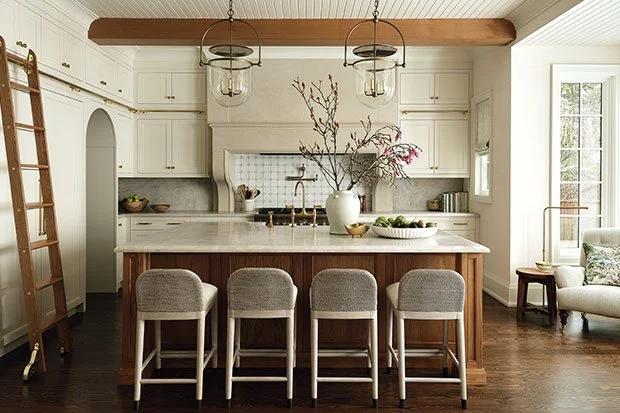
Credit: TOM Design Collective & Patrick Biller
That’s also why they tend to work best in spaces that already feel calm and uncluttered. A ladder should complement a room, not compete with it. The most successful ones are usually the simplest.
Natural wood tones, clean lines, and a bit of space around them almost always look better than anything overly decorative or crowded with accessories.
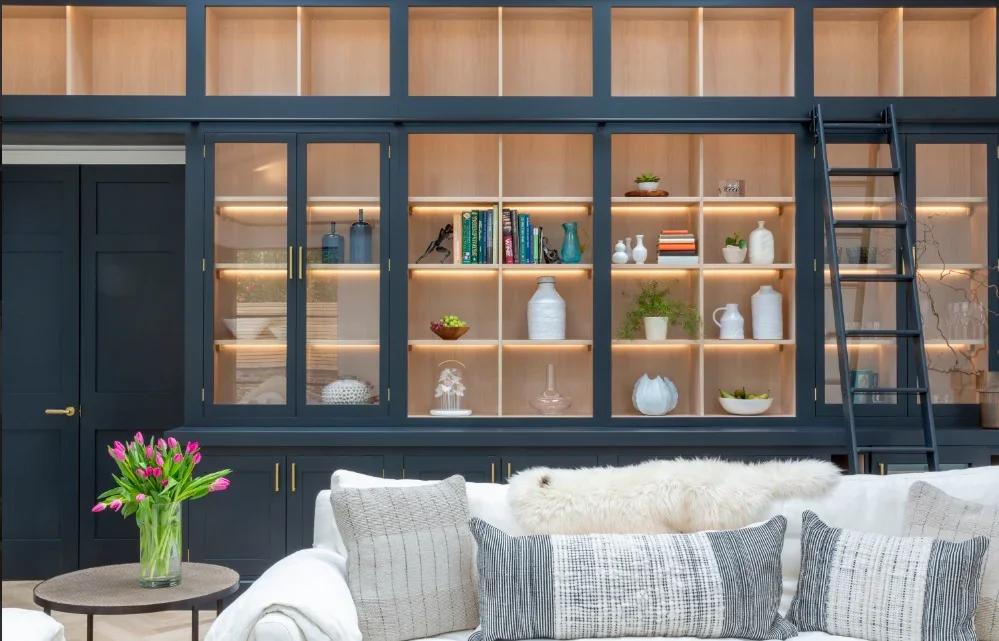
Credit: The Library Ladder Company
In bedrooms, ladders can make a space feel softer and more layered without adding visual weight. A folded quilt, linen throw, or textured blanket instantly adds warmth and dimension to the room.
It also feels more relaxed than traditional storage. Not every home needs more shelving, cabinetry, or furniture. Sometimes a room just needs a little variation in texture and height to stop it feeling flat.
Bathrooms are another space where ladders still make sense. They’re practical, but they also help break up the hard finishes that bathrooms naturally have. Tile, stone, mirrors, and fixtures can sometimes feel cold on their own. Adding wood tones and soft textiles helps balance that out.
The key is restraint. One towel draped casually over a ladder usually looks better than five perfectly folded ones stacked from top to bottom. The same goes for blankets and accessories elsewhere in the home. When every rung is filled, the ladder starts to feel forced rather than effortless.
Scale matters too. A small ladder floating awkwardly against a large wall can look disconnected, while an oversized one in a tight room can quickly overwhelm the space. Like most things in interiors, proportion makes all the difference.

Credit: Cindy Bleeks
For homes that lean more modern, black-stained wood or slimmer silhouettes tend to work best. In softer or more organic spaces, lighter oak tones and textured linens create a warmer feel.
And while ladders are often associated with farmhouse interiors, they’ve evolved well beyond that look. Used thoughtfully, they can work in contemporary, minimalist, coastal, or even more transitional spaces.
What matters most is that they feel natural within the room. Not every corner needs to be filled, and not every decorative piece needs to make a statement. Sometimes the best details are the ones that quietly add balance and warmth without demanding attention.
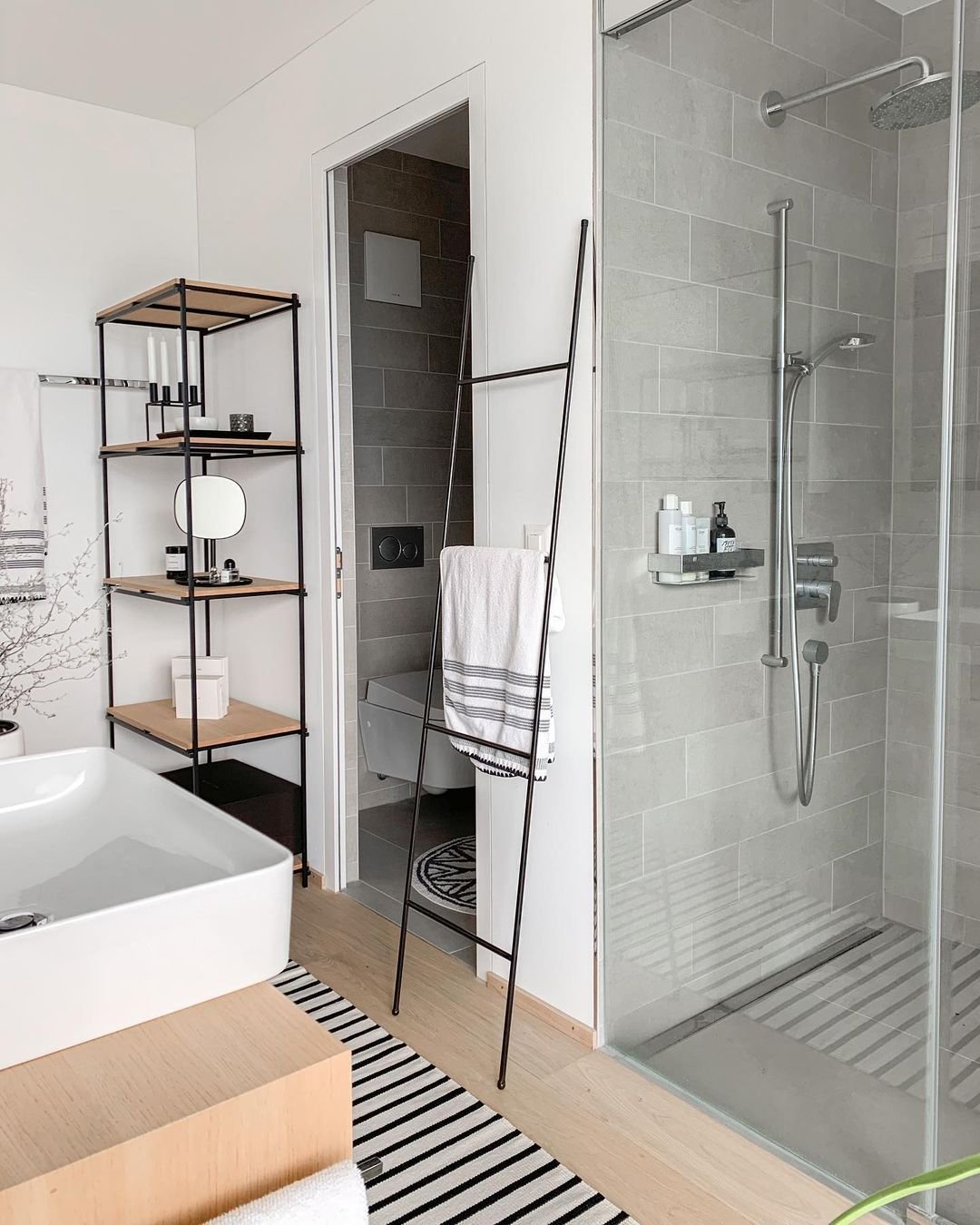
Credit: @oh.boheme
Of course, decorative ladders are not for everyone. Some people prefer cleaner walls, closed storage, or a more minimal approach. Open shelving, baskets, hooks, or freestanding rails can create a similar effect depending on the space.
Credit: Kira David Design
But when used with simplicity and restraint, a ladder still has a place in a home. Not as a trend piece, but as one of those small details that helps a room feel softer, warmer, and more lived in.