
What to Think About Before Choosing Bathroom Tile
Tile covers more surface area in a bathroom than almost any other material, so the choices you make with it have a big impact on the overall feel of the space. The examples below show how different tile decisions change the look of a bathroom, but they also highlight a few practical things people should think about before choosing tile.
Tile size changes how a wall reads
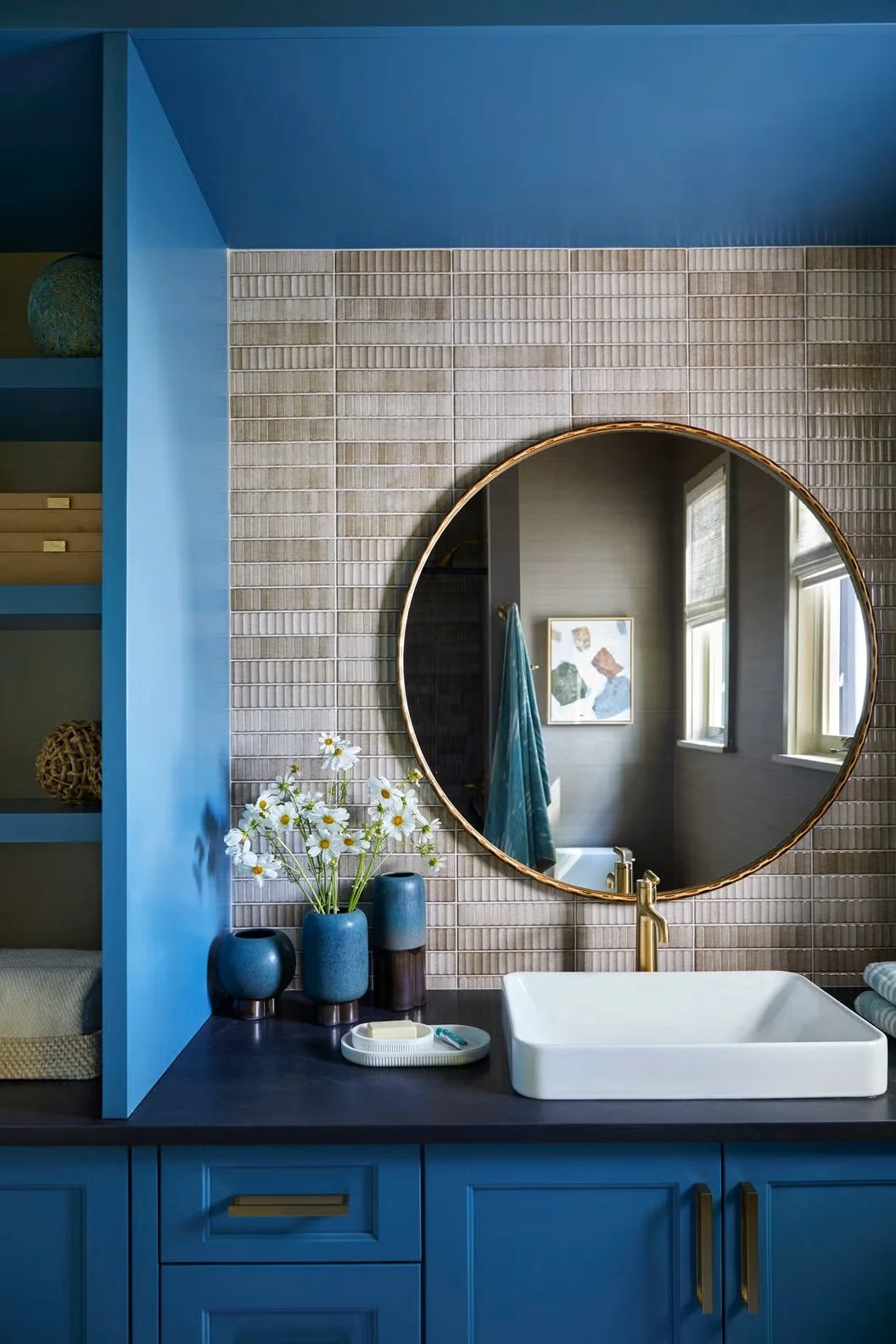
Small tiles create more grout lines, which adds visual texture and detail. Larger tiles reduce grout lines and tend to make a wall look calmer and more continuous.
In the blue vanity example, the smaller tiles create movement across the wall because the ridged surface catches the light differently. This kind of tile works well when you want texture without introducing a strong colour or pattern.
Credit: Brie Williams
Some materials bring their own pattern
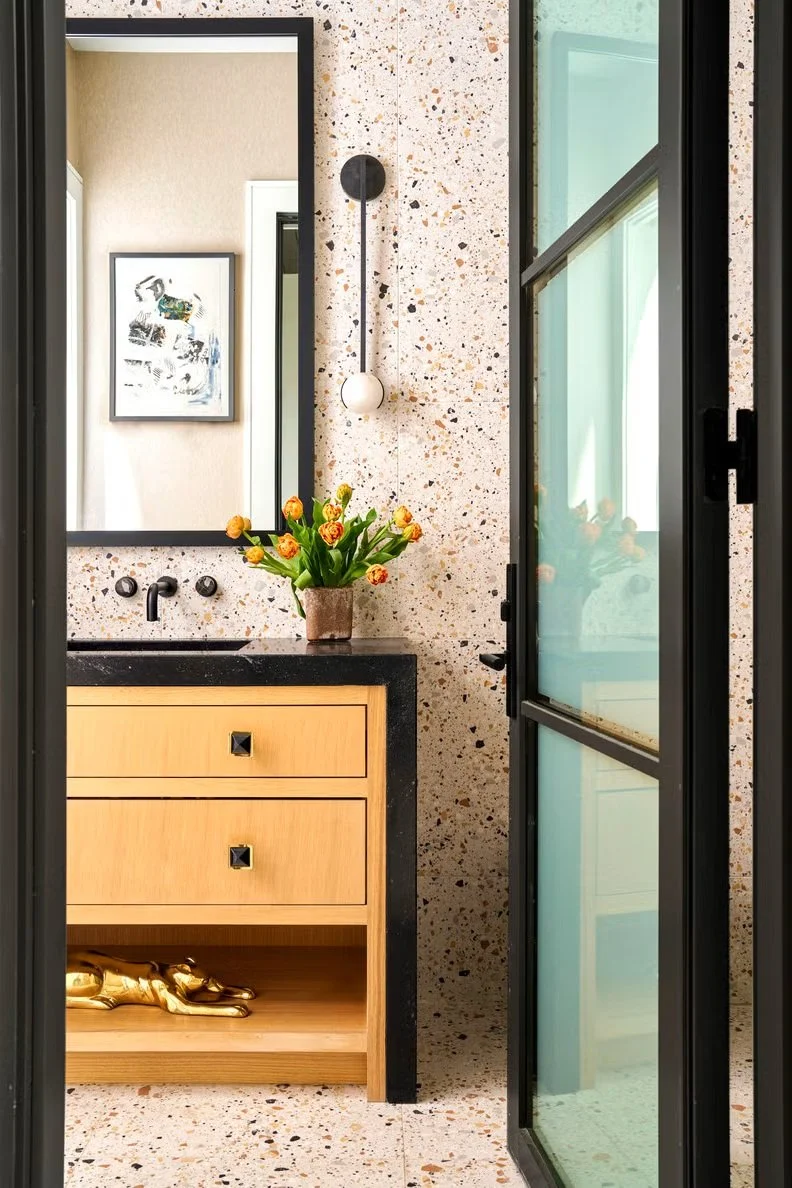
Not all tile patterns come from the layout. Some materials already have visual variation built in. Terrazzo is a good example. The small fragments of stone create colour and movement across the surface, which means you can keep the rest of the room fairly simple and still have something visually interesting.
Credit: Nathan Schroder
Simple floor tile can balance a bold feature
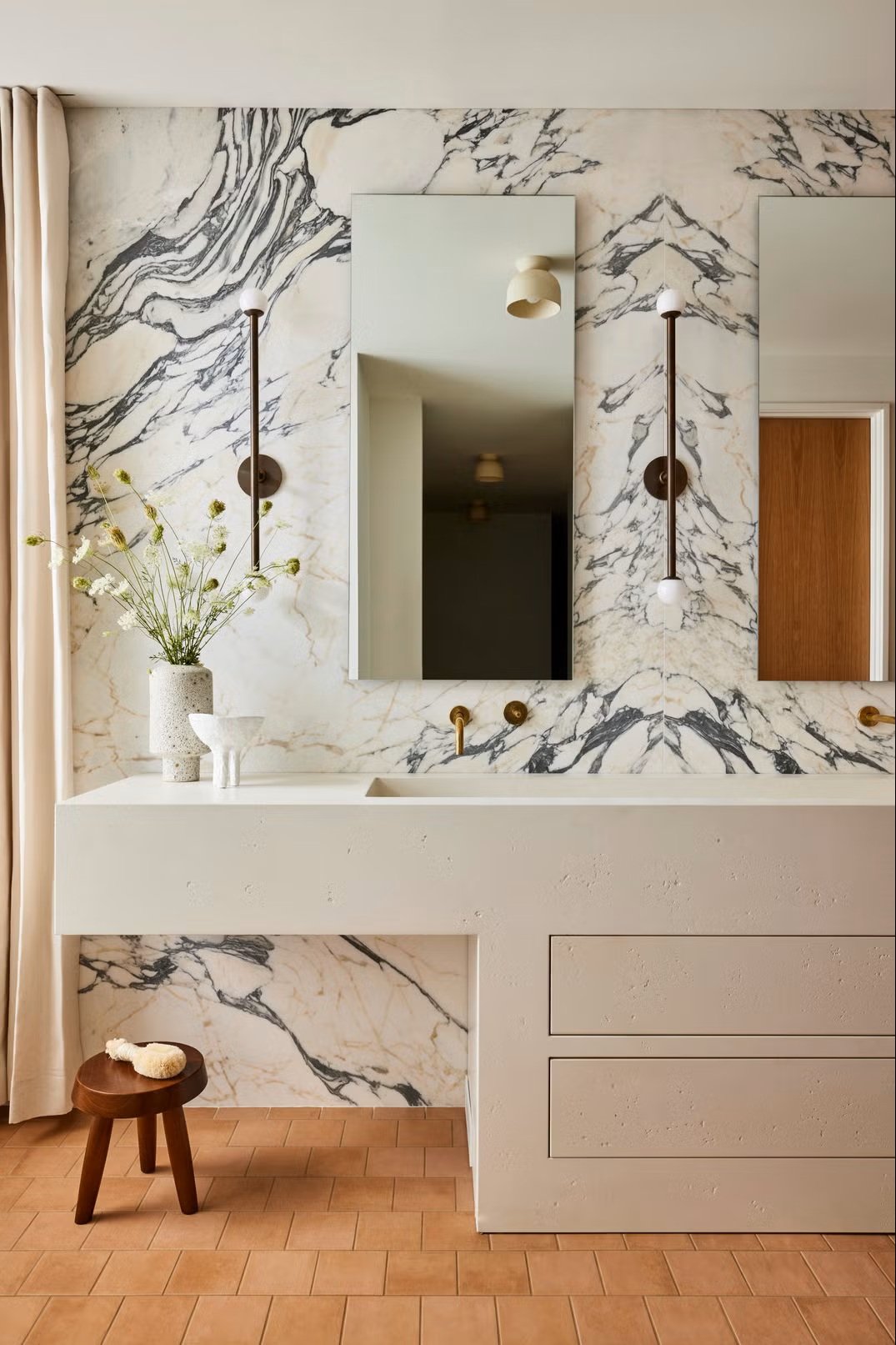
Sometimes the tile in a bathroom is intentionally kept simple so it doesn’t compete with other elements in the room. In this example, the terracotta floor tile has a straightforward shape and layout. That simplicity grounds the space and keeps the focus from competing with the marble wall behind the vanity.
Credit: Nicole Franzen
Layout matters just as much as the tile
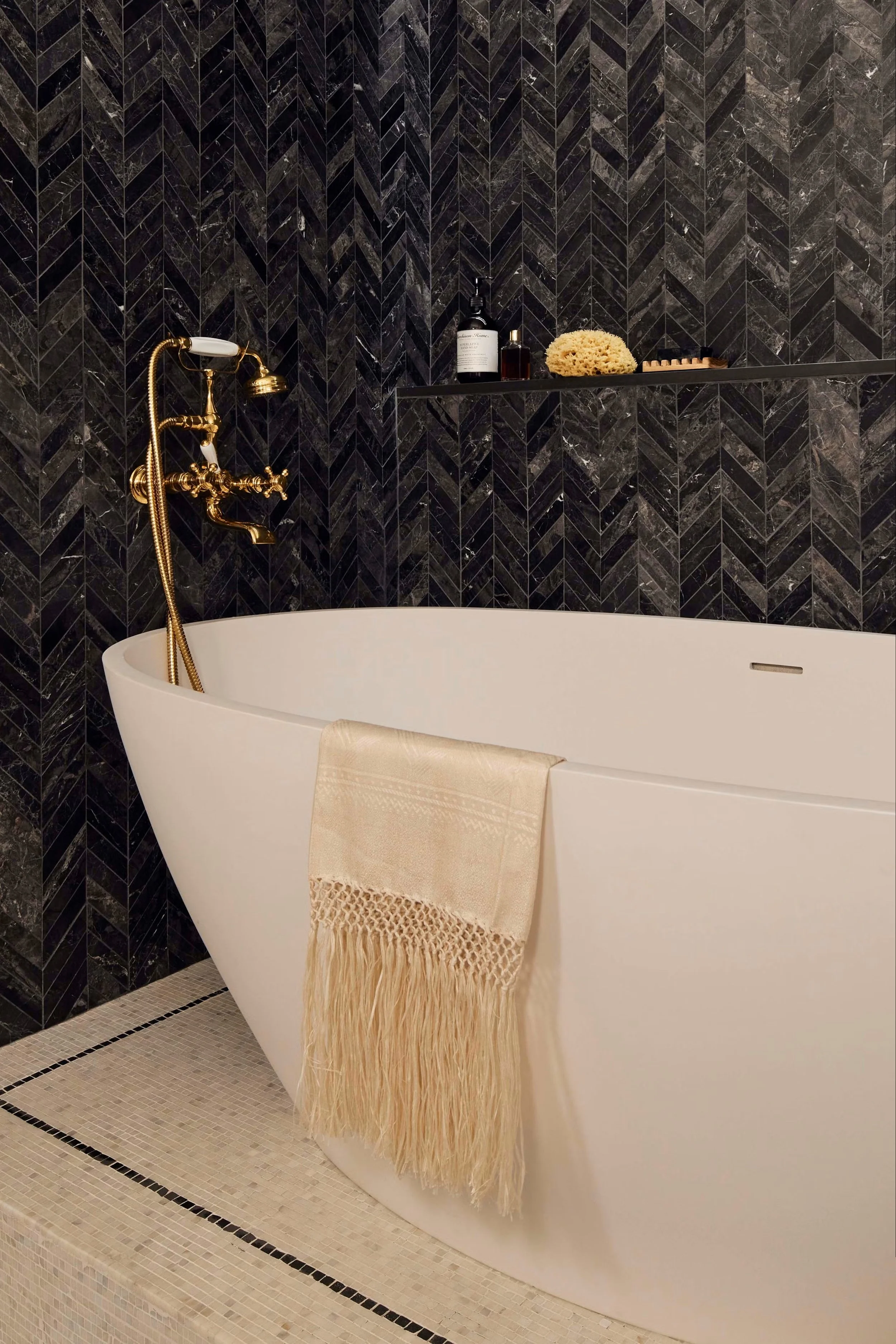
The same tile can look completely different depending on how it is installed. A herringbone pattern, for example, adds movement to a wall and draws the eye upward.
Changing the direction of the tile is one of the simplest ways to make a surface feel more dynamic without changing the material itself.
Credit: Gieves Anderson
Patterned tile can define a small space
In smaller bathrooms or shower areas, patterned tile can become the main design element. When the tile carries a strong pattern, the rest of the materials usually stay simple so the room doesn’t feel busy.
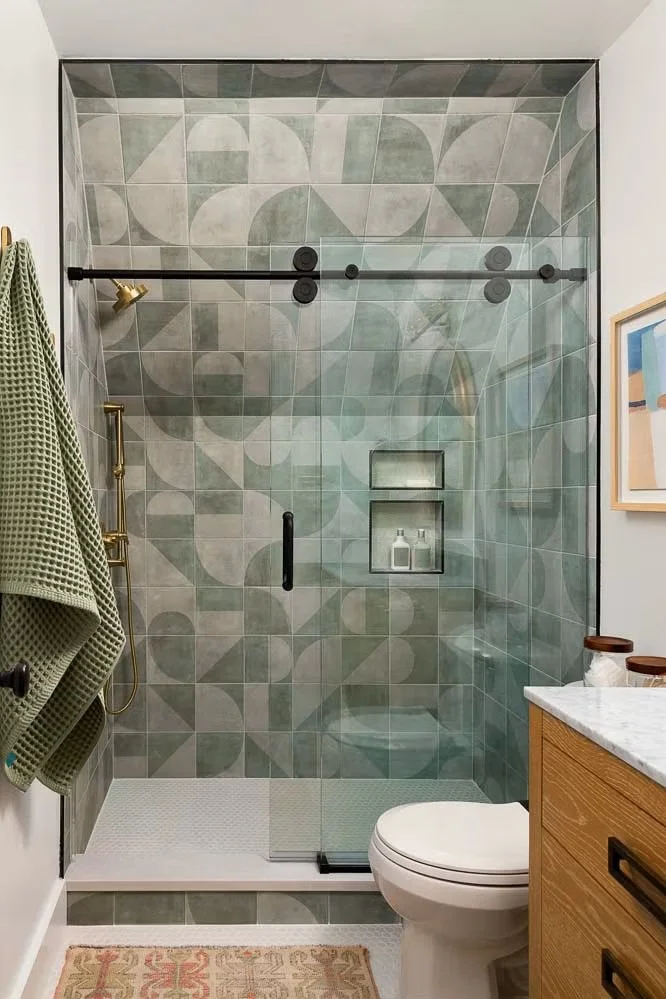
Credit: Cati Teague
Floors are often where pattern works best
Many bathrooms keep the walls fairly neutral and use the floor tile to introduce pattern. This approach anchors the room visually while keeping the rest of the surfaces calmer.
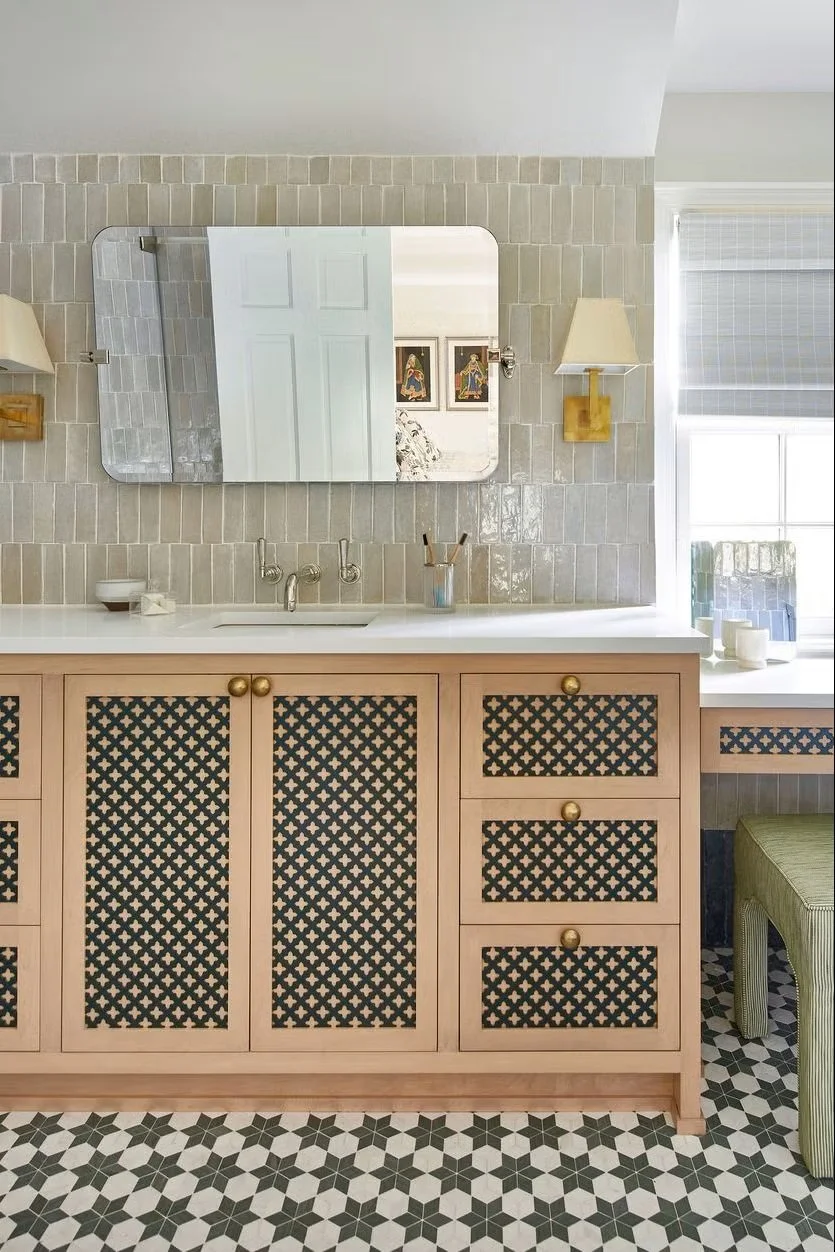
Credit: Jacob Snavely
Small mosaic tiles are often used in showers for a reason
Mosaic tiles are common on shower floors because the extra grout lines provide more grip underfoot. This makes them a practical choice in wet areas while still allowing for subtle pattern or contrast.
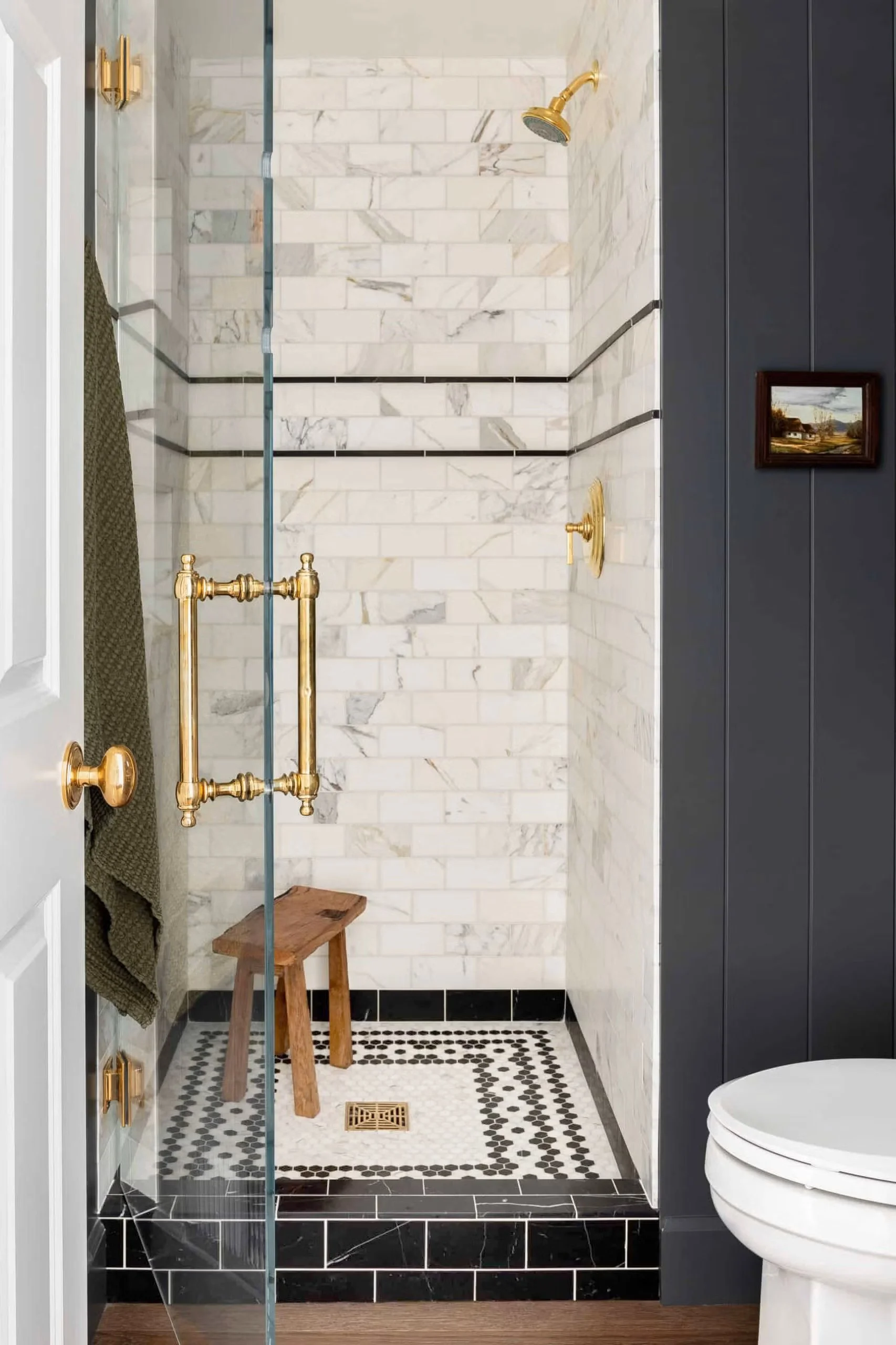
Credit: Heidi Caillier Design
Tile direction can change how a space feels
The direction of tile installation can influence how a room is perceived. Vertical stacking draws the eye upward and can make a shower feel taller, while horizontal layouts emphasize width.
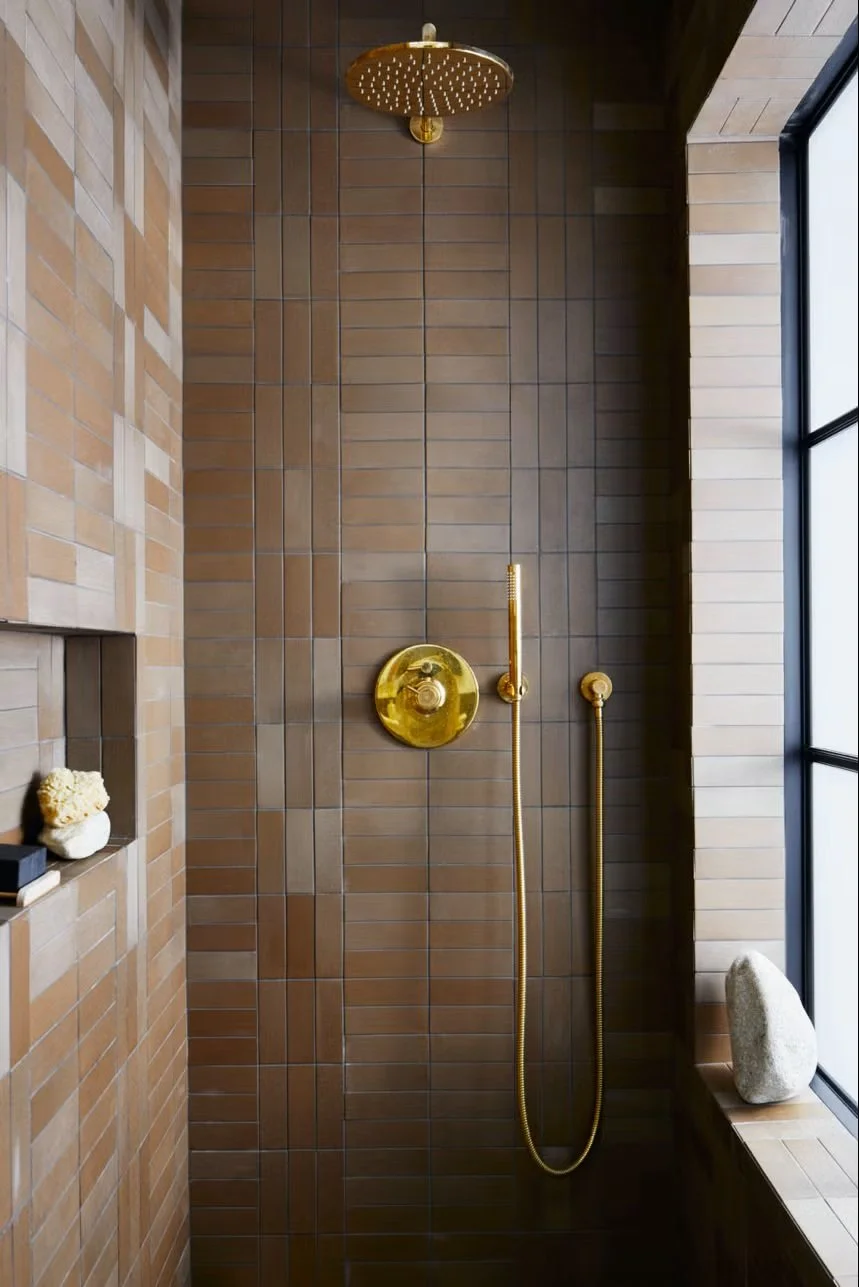
Credit: Robert McKinley Studio
Tile covers a large portion of most bathrooms, so the choices you make with it tend to shape the entire space. Size, material, pattern, and layout all influence how the room will look once everything is in place. Getting those decisions right early usually makes the finished bathroom feel much more cohesive and comfortable to live with.