
When Moody Interiors Make Sense and When They Don’t
Over the past year, we’ve seen darker, richer interiors showing up more and more. Deep greens. Soft black walls. Walnut cabinetry. Dramatic lighting. Stone with strong movement.
There is something undeniably beautiful about it.
But here’s the part that matters. Darker interiors work best when they are chosen for the right reasons, not just because they photograph well.
If you’re drawn to moody spaces, it’s worth understanding what actually makes them successful.
Why Dark Interiors Feel So Appealing
Richer palettes feel grounded. They can create intimacy, comfort, and depth. In the right home, they feel substantial and confident.
A darker room can make art stand out. It can highlight architectural detail. It can soften bright natural light. It can also add contrast to a home that previously felt flat or overly neutral.
For many homeowners, especially those who have lived with white walls for years, it feels refreshing. It feels grown up.
But that doesn’t automatically mean it’s the right choice for every space.
Credit: Madeline Harper
Light Matters More Than Colour
The most important factor in any darker interior is light.
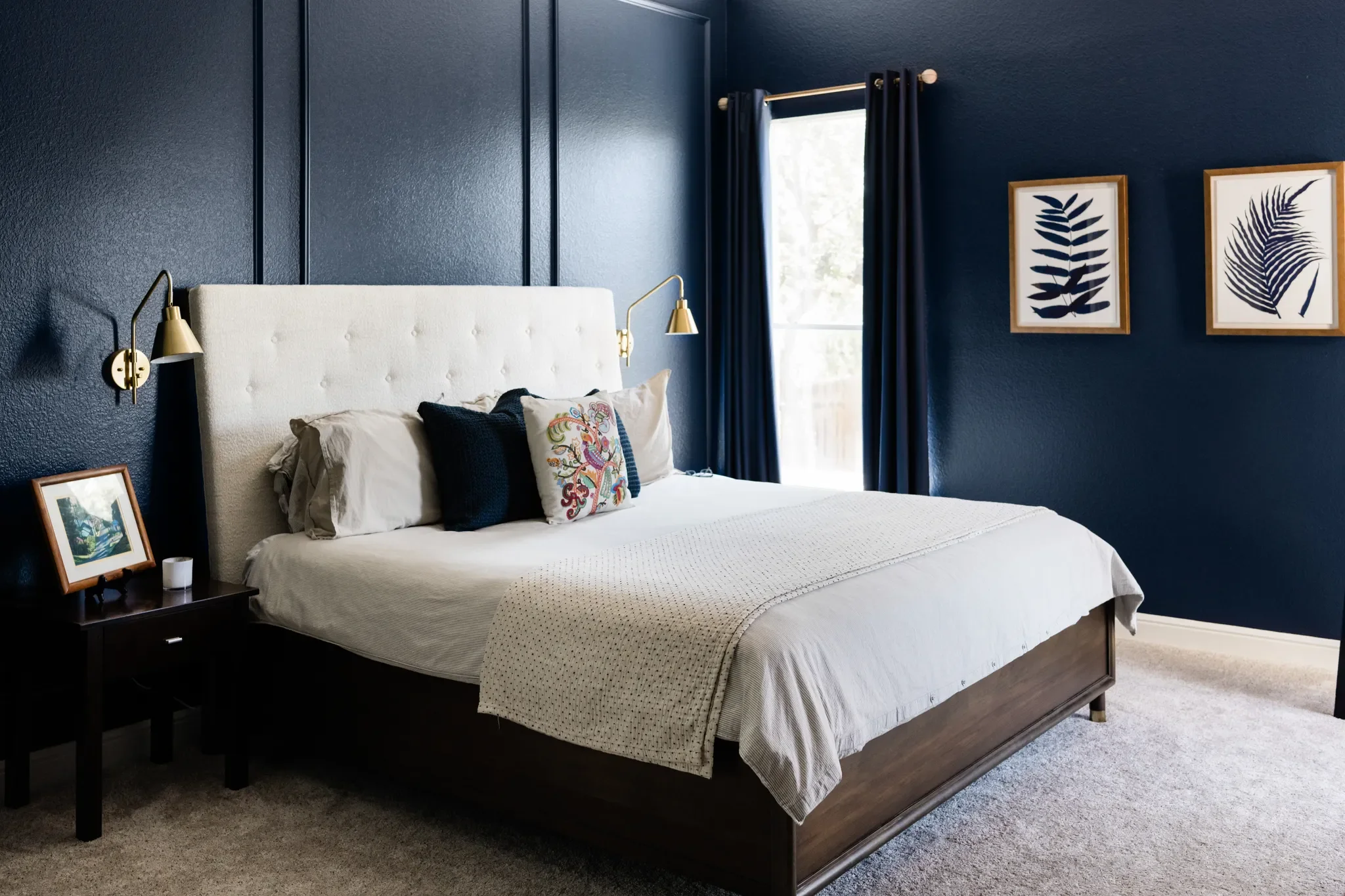
If a room has strong natural light, good ceiling height, and thoughtful artificial lighting, deeper tones can feel rich and inviting.
If the lighting is limited or uneven, those same colours can feel heavy very quickly.
This is where planning matters.
It’s not just about paint. It’s about how light moves through the room at different times of day. It’s about how materials reflect or absorb light. It’s about the finish on cabinetry and flooring. A matte dark paint reads very differently than one with subtle sheen.
Without looking at the whole picture, it’s easy to love the idea but struggle with the result.
Dark Doesn’t Mean Cold
One of the biggest mistakes I see with darker interiors is forgetting warmth.
Deep paint alone won’t create a welcoming space. You need texture. You need variation. You need contrast in materials such as wood, fabric, stone, and metal.
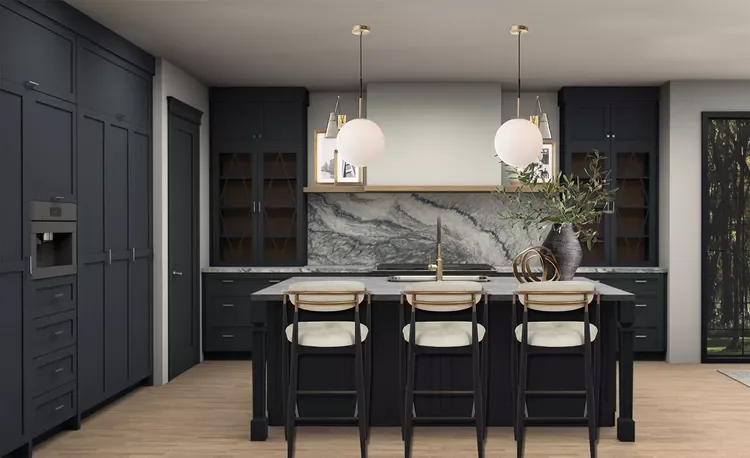
Warm walnut cabinetry against a darker wall feels very different from flat grey against black.
A moody kitchen paired with the wrong lighting can feel stark. The same kitchen, balanced with warm under-cabinet lighting and softer finishes, feels inviting.
It isn’t about adding more. It’s about balancing what’s already there.
Credit: Inspired Haven Design
Consider How You Actually Live
This is where I always bring clients back.
Do you entertain frequently?
Do you prefer bright mornings or cozy evenings?
Do you have grandchildren visiting?
Does your kitchen double as homework space or casual gathering space?
A dark dining room that feels dramatic for dinner parties may not feel right at 8 a.m. on a weekday.
A moody office might be exactly what you need for focus.
The point isn’t whether dark interiors are “in.” It’s whether they support your lifestyle.
Design that works long term always comes back to function.
Where Moody Interiors Work Beautifully
Some spaces naturally support deeper tones:
• Dining rooms
• Powder rooms
• Home offices
• Libraries
• Bedrooms with strong lighting
These are places where intimacy and focus can feel appropriate.
Open concept main floors are more complex. They require careful transitions and material balance to avoid visual heaviness.
That doesn’t mean they can’t work. It just means they require more planning.
The Difference Between Inspiration and Implementation
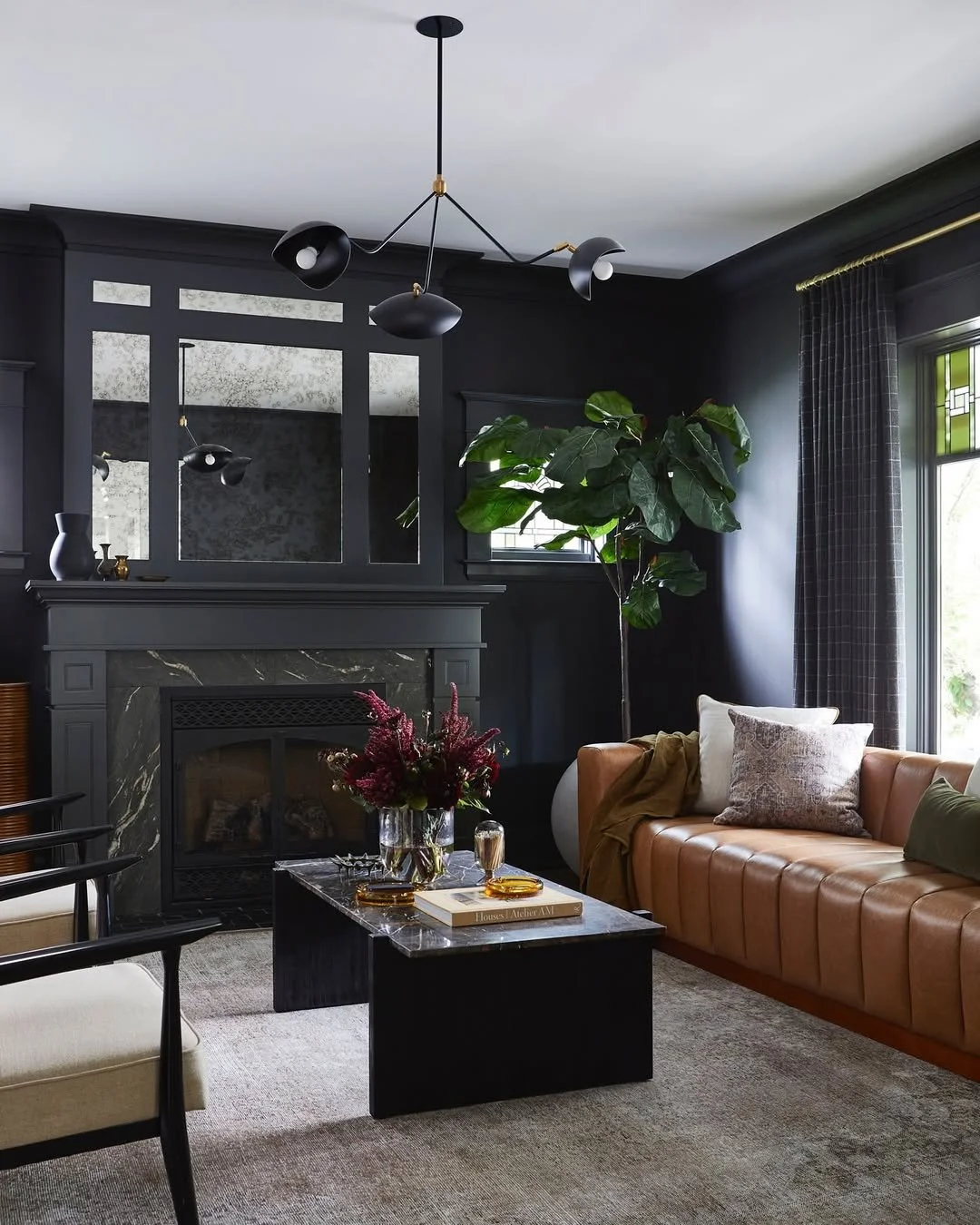
It’s easy to fall in love with inspiration images. Professional photography captures depth and contrast in a way that real life doesn’t always replicate.
What you don’t see in those photos is the lighting plan, the underlying architecture, or the scale of the space.
That doesn’t make the idea wrong. It just means the execution is everything.
The homes that feel timeless aren’t copying a mood. They are applying it in a way that suits the structure, light, and people living inside.
Credit: @ruemagazine
A Calm Approach to Bold Choices
If you’re drawn to a darker direction, that’s worth exploring.
But instead of asking, “Is this trending?” the better question is, “Will this still feel right five years from now?”
When we approach darker interiors with that lens, the decisions become clearer.
You might paint one room instead of the entire home.
You might bring in depth through cabinetry instead of walls.
You might layer in warmth through flooring and textiles rather than committing to dramatic paint.
There are many ways to achieve richness without overwhelming a space.
Dark and moody interiors can feel incredibly beautiful when they’re supported by thoughtful planning.
The goal isn’t to follow a direction just because it’s popular. It’s to create a space that feels grounded, comfortable, and reflective of how you actually live.
If you’re considering a change in palette or finish and aren’t sure where to begin, I’d love to talk through what would make the most sense in your home.
Interested in working with Marianne Elizabeth Design? Inquire here