
Window Treatments in Interior Design
Window treatments tend to get left until the end. Paint is chosen, furniture is ordered, lighting is sorted and then someone says, “We’ll deal with the windows later.”
The truth is, window treatments do a lot more than provide privacy. They shape how a room feels, how light moves through it, and whether a space looks intentional or unfinished.
A well chosen window treatment can soften a room, add warmth, control light, and quietly elevate everything around it. When it’s done well, you barely notice it. You just feel how complete the space is.
Start with how the room is used
Before getting into fabrics or styles, it helps to think about how the room actually functions. A bedroom needs privacy and light control. A living room often needs flexibility depending on the time of day. A kitchen might need something streamlined that does not compete with cabinetry or sightlines.
Window treatments should work with real life, not against it. The best designs balance privacy, light, comfort, and aesthetics without overcomplicating things.
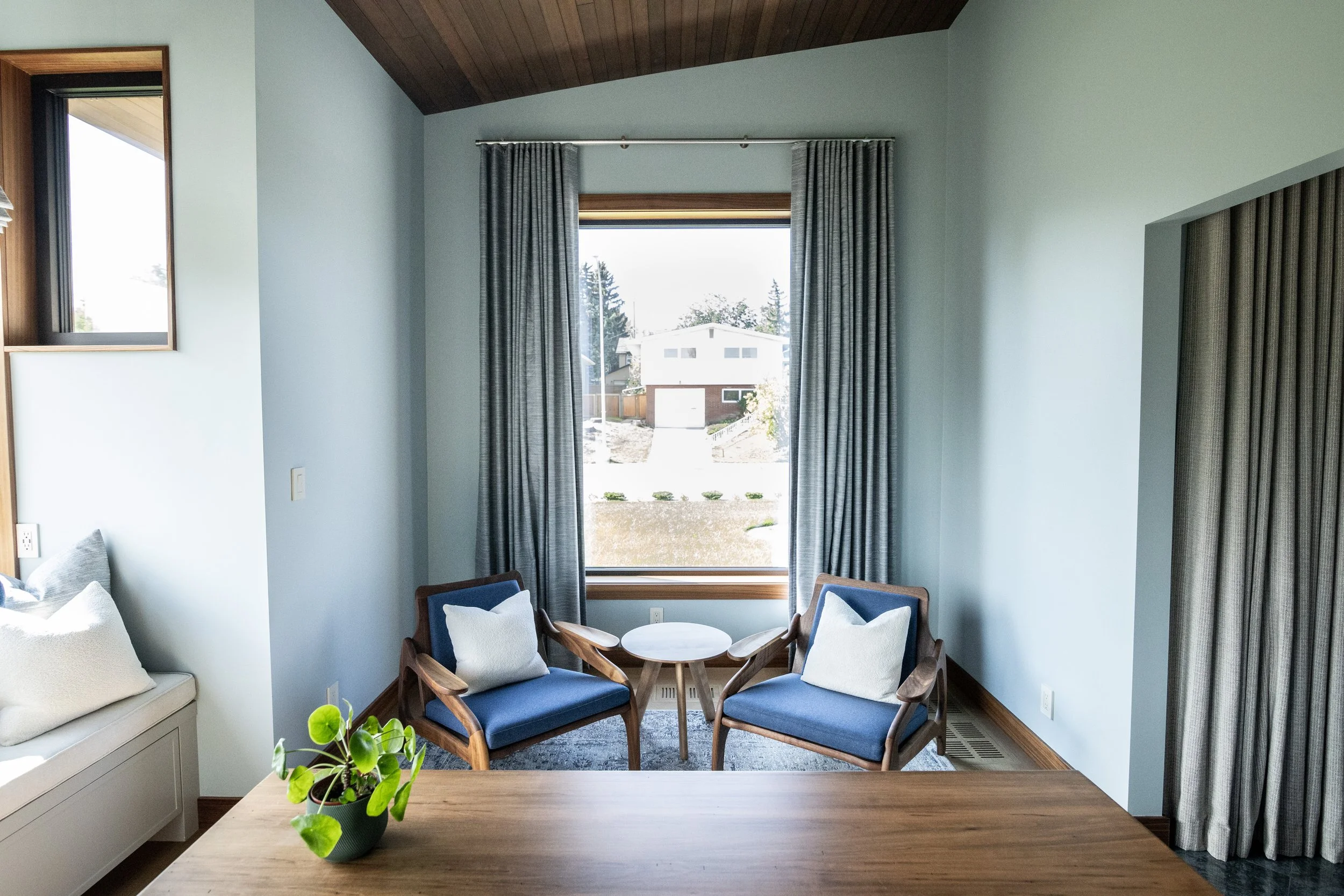
Layering is what makes it feel considered
One of the most effective and modern approaches is layering. This usually means combining a more functional base layer with something softer on top.
For example, a simple shade paired with drapery allows you to control light during the day while adding texture and warmth overall. Sheers can gently filter daylight without blocking it. Drapery adds softness and scale, especially when it runs floor to ceiling.
Layering gives a space depth. It feels styled rather than solved.
Fabric and texture matter more than patterns
Modern window treatments tend to favour texture over busy patterns. Soft linens, subtle weaves, and natural looking materials age far better than anything too bold or trendy.
Neutral does not mean boring. Texture does a lot of heavy lifting. It brings warmth, movement, and visual interest without overwhelming the room.
When everything else in a space is doing its job, window treatments can quietly support it rather than compete for attention.
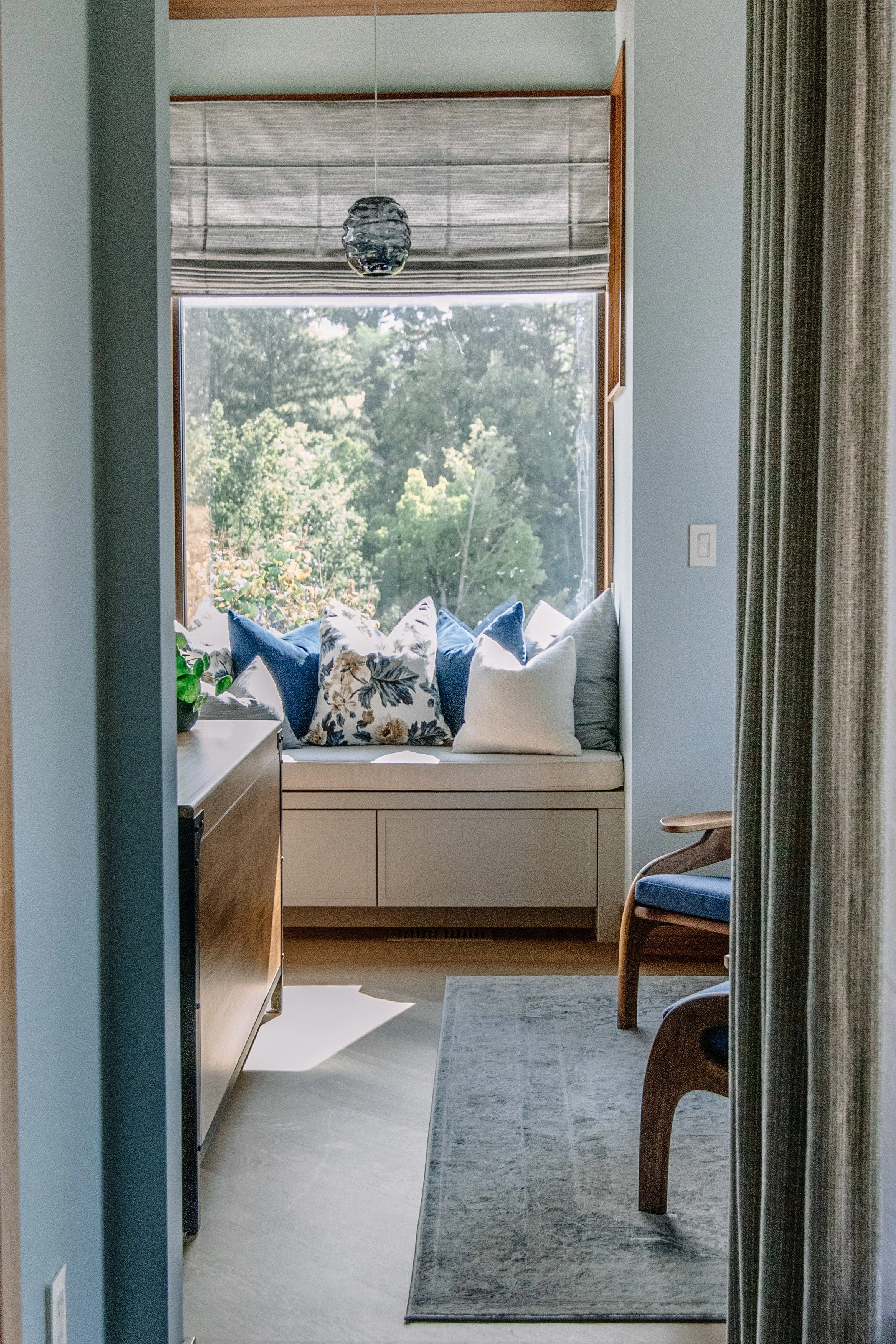
Proportion makes a bigger difference than people expect
One of the simplest ways to elevate a room is to think about placement. Hanging treatments higher and letting them fall longer creates the illusion of taller ceilings and larger windows.
This is not about exaggeration or drama. It’s about balance. Window treatments that skim the floor or sit slightly above it tend to feel intentional. Short or awkwardly placed treatments often make a space feel unfinished, even if everything else is beautiful.
Every room does not need the same solution
Matching window treatments throughout an entire home is not necessary. What matters more is cohesion.
A bedroom might need calm and softness. A dining room might benefit from more structure. A home office may need light control without visual heaviness.
Designing window treatments room by room allows each space to function at its best while still feeling connected to the rest of the home.
This is where professional guidance helps
Choosing window treatments sounds simple until you start making decisions. Fabric weight, light direction, ceiling height, privacy needs, hardware placement and room function all matter.
At Marianne Elizabeth Design, window treatments are considered as part of the overall design, not a last minute add on. The goal is always to create spaces that feel timeless, cohesive, and thoughtful.
When window treatments are considered early, decisions around light control, proportion, and materials come together more naturally, rather than feeling like an afterthought once everything else is finished.